

News
more+- Professor Chen Erfan, a leader of our company, was invited to attend the inauguration ceremony for the new location of Shenyang Zhilang Technology Co., Ltd. and visited its research achievements and new products.
- The 4th Annual Meeting of the Special Committee and the 3rd New Materials Science & Technology Conference Held in Hangzhou
- Professor Chen, a leader of our company, participated in the Standardization Technical Committee of the Chemical Industry and Engineering Society of China.
- Warm Congratulations on Our Company Being Awarded the Certificate of High-Tech Enterprise!
- Chairman Chen Erfan Participated in Liaoning International Rubber Technology Exchange Festival as a Specially Invited Expert.
contact
more+Contact Phone:13147811246 13147811216
Landline:13147811246 13147811216
Corporate Email:tech@rdpmcn.com
Address:Hongfa International, Shenliao Road, Tiexi District, Shenyang City, Liaoning Province, P.R.China
Sales Phone:13147811246 13147811216
News
China's Synthetic Rubber: Sixty Years of Independent Innovation
发布时间:2020-06-08
点击量:3742
Since the industrial production of China's independently developed neoprene device was achieved in 1958, China's synthetic rubber industry has experienced a glorious 60 - year development journey. Starting from independent research and development, developing through technology introduction, and continuously improving, enriching, and growing relying on independent innovation, the synthetic rubber industry has become the sector among China's three major synthetic materials with the most independent innovation technologies from raw materials to products.
At present, China ranks first in the world in terms of synthetic rubber plant capacity, production volume, and consumption. The technologies for the eight general - purpose synthetic rubbers and their main raw materials have been industrialized using domestic - owned technologies. The production technologies for some general - purpose varieties are relatively mature, with economic and technical indicators comparable to those abroad, and the thermoplastic elastomer SBC is at the world - advanced level.
On September 6th, the China Synthetic Rubber Industry Association held the 60th Anniversary Commemoration of China's Synthetic Rubber Industrialization and the 23rd Annual Industry Conference in Beijing. The conference summarized the development achievements of China's synthetic rubber industry over the past 60 years and studied and analyzed the new situations and tasks faced by the industry.
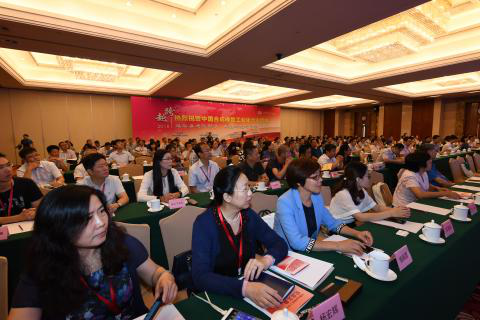
Relevant leaders from the National Development and Reform Commission, the Ministry of Industry and Information Technology, the China Petroleum and Chemical Industry Federation, and the International Institute of Synthetic Rubber Producers attended the conference. A total of more than 220 people, including relevant leaders from Sinopec and PetroChina, member - unit enterprises, and industry experts, participated in the conference.
At the conference, Qi Runtong, the vice - president of the China Synthetic Rubber Industry Association, summarized the main achievements of independent innovation in China's synthetic rubber industry over the past 60 years, and introduced the independent development process of industrialization technologies for 10 major categories of products, including cis - 1,4 - polybutadiene rubber, styrene - butadiene rubber, nitrile - butadiene rubber, ethylene - propylene rubber, butyl rubber, polyisoprene rubber, thermoplastic styrene - butadiene rubber, liquid rubber, dynamically - vulcanized thermoplastic elastomer, and synthetic rubber monomers. According to incomplete statistics, the synthetic rubber field in China has received nearly 20 national - level awards in technological invention, scientific and technological progress, and natural science.
Wu Zhiyong, the deputy director of the Chemical Business Department of Sinopec, said that over the past 60 years, China's synthetic rubber industry has developed at a rapid pace. Its production capacity has increased from 93,000 tons in 1978 to nearly 6 million tons in 2017. A development system including scientific research, production, design, and application development has been formed. A number of production enterprises and R & D bases that meet the development needs have been established, and a team of professionals with high technical and professional qualities has been trained, laying a solid foundation for the development of China's synthetic rubber industry. He introduced that currently, Sinopec's annual synthetic rubber production capacity reaches 1.73 million tons, ranking first in China and second globally. It has achieved a zero - breakthrough in the export of independently developed complete sets of technologies and ranks first in China in terms of the number of patents, making its own contribution to the development of China's synthetic rubber industry.
Hu Jie, the vice - president of PetroChina's Research Institute of Petroleum Processing, said that synthetic rubber has always been a traditional advantageous product and an important industrial development direction of PetroChina's refining and chemical business. A great deal of work has been done in environmental - friendly complete sets of technologies and product serialization, achieving good results. In the future, PetroChina, together with industry associations and member enterprises, will implement new development concepts, address issues such as product structure adjustment and unbalanced and inadequate development, and promote the high - quality development of the industry.
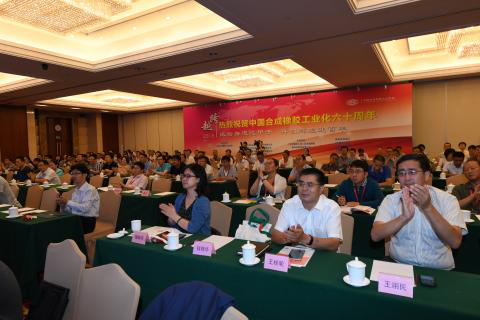
Liang Aimin, President of the China Synthetic Rubber Industry Association, summarized five stages of the development of the synthetic rubber industry:
The first stage was the 10 - year period from 1949 to 1958, a start - up stage from scratch. In 1950, the Changchun Institute of Applied Chemistry, Chinese Academy of Sciences, began basic research on neoprene. In 1955, as a major national project during the "First Five - Year Plan", the construction of a neoprene production facility was initiated and completed and put into production in 1958. Meanwhile, an agreement on the construction projects of synthetic rubber and its main raw material monomers was signed with the former Soviet Union. Independent research and development as well as cooperative development were the main themes of this period, realizing the industrialization of emulsion - polymerized styrene - butadiene rubber and nitrile - butadiene rubber.
The second stage was the 20 - year period from 1958 to 1978, a 20 - year period of continuous improvement and development with a stable growth rate of 10%. During this period, China regarded the vigorous development of synthetic rubber as an important part of the "Fourth Five - Year Plan" and organized a national - level research and development campaign. In this period, the industrialization of cis - 1,4 - polybutadiene rubber, ethylene - propylene rubber, and butadiene raw materials was achieved, and the production capacity continued to expand, but the annual output was less than 100,000 tons.
The third stage was the 25 - year period from 1978 to 2003. Against the backdrop of reform and opening up, a development trend of simultaneous technology introduction, digestion, absorption, re - innovation, and independent research and development emerged. An increasing number of product varieties and brands emerged, and the production capacity expanded at a growth rate of 15%. The industrialization of SBS and solution - polymerized styrene - butadiene rubber was achieved. During this period, the varieties and output of synthetic rubber developed rapidly, with an annual production capacity reaching 1.07 million tons.
The fourth stage was the 10 - year period from 2003 to 2013. The production capacity experienced a blow - out growth, with the total capacity exceeding four times the sum of the previous 40 years, ranking first in the world. This was also a 10 - year period with co - existing structural contradictions such as overcapacity and dependence on imports for high - end products. There were more than 60 synthetic rubber producers nationwide, with an annual production capacity of nearly 6 million tons, forming a pattern where Sinopec, PetroChina, private enterprises, and joint - venture enterprises shared the market.
The fifth stage was the 5 - year period from 2013 to 2017. Due to factors such as overcapacity, low rubber prices, and a decline in demand from downstream enterprises, more than a dozen synthetic rubber plants were in a state of shutdown or semi - shutdown, with a capacity utilization rate of only 61%. With the deepening of the country's supply - side structural reform, the industry is experiencing the pain of profit decline, mergers and acquisitions, and industrial upgrading. It is expected that this process will continue for several years.
Liang Aimin pointed out that according to the development plan of China's synthetic rubber industry, the industry needs to achieve two major leaps: one is to complete the industrial structure adjustment in about four years and realize the transformation of the entire industry through quality and technology upgrading; the other is to take another 15 years to shift from following and running parallel to leading.
Leaders from the Industrial Coordination Department of the National Development and Reform Commission and the Raw Materials Industry Department of the Ministry of Industry and Information Technology fully affirmed the achievements of the synthetic rubber industry over the past 60 years.
Zhang Wenming, the head of the Petrochemical and Chemical Division of the Raw Materials Department of the Ministry of Industry and Information Technology, simultaneously required that the synthetic rubber industry view the problems and challenges it faces rationally. He stated that the synthetic rubber industry still faces a severe situation. First, international technical and trade barriers, as well as corresponding regulations, are becoming increasingly strict. The development of green tires sets higher requirements for the selection of synthetic rubber raw materials, creating a "forcing" situation. Second, affected by the squeeze of imported products and export policies, there is a large trade deficit in synthetic rubber. The installed capacity cannot be effectively released, and the capacity utilization rate is lower than the world average. Third, the industry is "large but not strong," and its independent innovation ability needs to be further enhanced.
To this end, Zhang Wenming proposed that China's synthetic rubber industry should take supply - side reform as the main line to promote changes in the quality, efficiency, and driving force of industry development. First, adhere to the principle of quality first and efficiency priority to promote the synthetic rubber industry to move towards the high - end of the global value chain. Second, achieve changes in development efficiency by addressing weaknesses in factor efficiency and the allocation system and mechanism. Third, achieve changes in development driving force by enhancing the innovation ability of the synthetic rubber industry. In addition, China's synthetic rubber industry should also expand new spaces for international cooperation along the Belt and Road.
Zhao Jungui, the vice - president of the China Petroleum and Chemical Industry Federation, pointed out that after 60 years of arduous efforts, China's synthetic rubber industry has grown from nothing, from small to large, and from weak to strong. It has developed into the world's largest producer and consumer. The variety of main products has become more and more complete, the independent innovation ability has been continuously enhanced, the level of green development has been continuously improved, and the international market competitiveness and influence have been increasingly enhanced. It has taken solid steps towards becoming a powerful synthetic rubber industry country. He put forward three suggestions for the synthetic rubber industry:
First, strengthen confidence and optimize and strengthen the synthetic rubber industry. Although the synthetic rubber industry has made huge progress in quantity and quality, compared with top international multinational companies, in response to the needs of related industrial upgrades and people's expectations for a high - quality life, continuous upgrades are still needed in terms of product varieties, technology, and services. China has a long - term and huge demand for basic raw material industries, which is not only an advantage for the synthetic rubber field to make great achievements but also a driving force for optimizing and strengthening the industry.
Second, seize the new opportunities of the industrial revolution and accelerate the construction of a world - class new system for the synthetic rubber industry. Currently, technological innovation is becoming the core driving force for industrial development. Safety, greenness, and low - carbon are becoming the mainstream development models. Traditional manufacturing is accelerating its transformation towards digitalization, networking, and intelligent development. The physical petrochemical industry is accelerating its transfer to emerging markets such as Asia - Pacific, and the integration trend of the world petrochemical market is becoming more and more obvious. Strengthening the division of labor and cooperation in the international petrochemical industry is becoming an irreversible trend. At the same time, Sino - US trade frictions and uncertain factors in the international oil price trend bring unpredictable pressures and risks to the coordinated development of the future world petrochemical industry. The synthetic rubber industry faces not only the technical challenges of increasingly strict international technical barriers and relevant regulations and increasing difficulty in independent innovation but also the green challenges of increasingly high standards for the use of synthetic rubber raw materials.
Third, change perspectives, strengthen industry self - discipline, and improve the organizational degree of the synthetic rubber industry. After 30 years of rapid development, all production and operation conditions have changed dramatically, and the business ideas and business models of enterprises should also change accordingly. Only by seizing the new opportunities of the world industrial revolution, having the courage to use advanced international new technologies, production models, and business models to transform and upgrade China's synthetic rubber industry, and accelerating the establishment of a modern new system for the synthetic rubber industry can we win a better future for development.
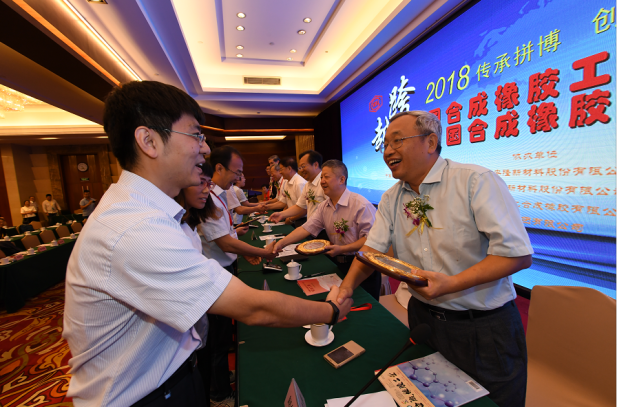
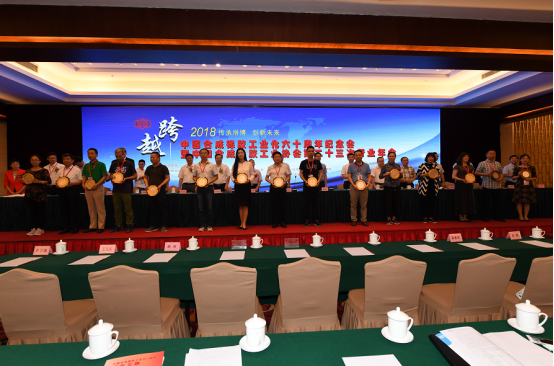
At the conference, Professor Zhang Liqun from Beijing University of Chemical Technology was specially appointed as the director of the Expert Committee of the China Synthetic Rubber Industry Association. At the same time, 28 member units that have made outstanding contributions to the industrialization of China's synthetic rubber were commended.