

News
more+- Professor Chen Erfan, a leader of our company, was invited to attend the inauguration ceremony for the new location of Shenyang Zhilang Technology Co., Ltd. and visited its research achievements and new products.
- The 4th Annual Meeting of the Special Committee and the 3rd New Materials Science & Technology Conference Held in Hangzhou
- Professor Chen, a leader of our company, participated in the Standardization Technical Committee of the Chemical Industry and Engineering Society of China.
- Warm Congratulations on Our Company Being Awarded the Certificate of High-Tech Enterprise!
- Chairman Chen Erfan Participated in Liaoning International Rubber Technology Exchange Festival as a Specially Invited Expert.
contact
more+Contact Phone:13147811246 13147811216
Landline:13147811246 13147811216
Corporate Email:tech@rdpmcn.com
Address:Hongfa International, Shenliao Road, Tiexi District, Shenyang City, Liaoning Province, P.R.China
Sales Phone:13147811246 13147811216
Green Production of Rubber Accelerators NS & CBS (by Plasma site)
Release Date:2026-01-13
Page Views:847
Materials that respond to a magnetic field in a certain manner are called magnetic materials. The term "magnetic materials" commonly refers to strong magnetic materials. According to the difficulty of magnetization, magnetic materials are generally classified into soft magnetic materials and hard magnetic materials. Hard magnetic materials (permanent magnetic materials) are materials that can maintain constant magnetism once magnetized.
On March 11, 2011, a magnitude 9 earthquake and massive tsunami struck eastern Japan, killing more than 20,500 people and forcing 320,000 others to evacuate from the disaster-stricken areas. The truth lies in the subsequent three nuclear disasters: power outages and mechanical deformation caused by the earthquake and tsunami disabled the facilities that supplied seawater to the nuclear power plants, resulting in the loss of cooling functions at the Fukushima Daiichi and Daini Nuclear Power Stations. Nuclear leakage and explosions occurred at the Fukushima Daiichi Nuclear Power Station. In 1979, a shortage of cooling water also caused a partial meltdown at a nuclear reactor in the United States, leading to the most serious nuclear leakage accident in the country’s history. | 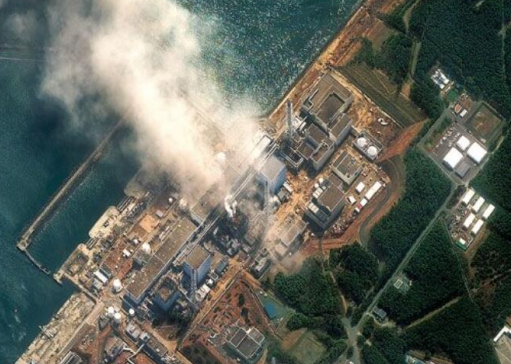 |
Large industrial facilities such as nuclear power plants are generally equipped with emergency water intake and cooling systems. These systems typically rely on electric power and manual operation to activate emergency water supply when needed. However, under severe conditions such as earthquakes, electric power and manual operation may fail to open the valves.
Therefore, how to achieve valve opening under emergency conditions without electric power and manual operation, so as to inject water from the reservoir into the cooling-required parts of nuclear power stations, as well as the delivery of gas and liquid fluids under various emergency situations, has become a key technical problem urgently to be solved both domestically and internationally.
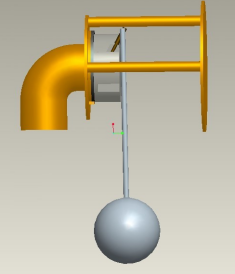
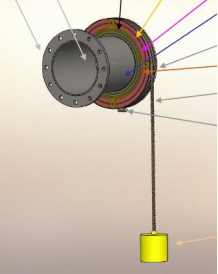
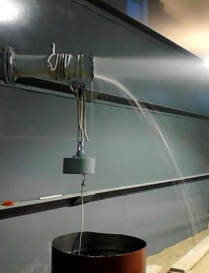
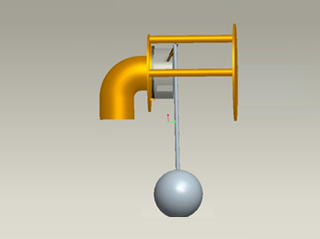
Our company has developed a passive (non-electric, non-manual) permanent magnet valve for industrial emergency tide‑absorbing water intake.It automatically opens the water source valve upon occurrence of a preset emergency condition, allowing the rubber dam to collapse automatically so that water flows into the facilities requiring cooling. The opening and closing of the permanent magnet valve can be controlled by preset technical parameters such as water level, pressure and temperature. This technology has been granted a national invention patent and has been applied in actual engineering projects. | 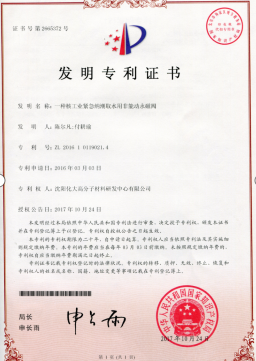 |
|
|
|
Water Level Control Principle of Passive Permanent Magnet Valve | Passive Permanent Magnet Valve: Water Level Control Principle | Engineering Simulation Experiment |