


News
more+- Professor Chen Erfan, a leader of our company, was invited to attend the inauguration ceremony for the new location of Shenyang Zhilang Technology Co., Ltd. and visited its research achievements and new products.
- The 4th Annual Meeting of the Special Committee and the 3rd New Materials Science & Technology Conference Held in Hangzhou
- Professor Chen, a leader of our company, participated in the Standardization Technical Committee of the Chemical Industry and Engineering Society of China.
- Warm Congratulations on Our Company Being Awarded the Certificate of High-Tech Enterprise!
- Chairman Chen Erfan Participated in Liaoning International Rubber Technology Exchange Festival as a Specially Invited Expert.
contact
more+Contact Phone:13147811246 13147811216
Landline:13147811246 13147811216
Corporate Email:tech@rdpmcn.com
Address:Hongfa International, Shenliao Road, Tiexi District, Shenyang City, Liaoning Province, P.R.China
Sales Phone:13147811246 13147811216
News
Air - shield Dam Manufacturer Explains: How to Deal with Dam Bag Damage?
发布时间:2020-09-22
点击量:3678
We all know that rubber dams can increase the reservoir capacity and the water - flow drop of the reservoir, thereby increasing power generation. So, how should we deal with the damage to the dam bag? The air - shield dam manufacturer will explain it to you!
A rubber dam is mainly composed of civil engineering parts, the dam bag and its anchors, the water (air) filling and drainage facilities, and the control system. When the rubber dam is in operation, it must be carried out in strict accordance with the specified plan and operating procedures. Pay attention that the water (air) filling pressure in the dam bag should not exceed the design pressure to avoid damage to the dam bag. Although rubber dams rarely need maintenance and do not require regular painting for rust prevention like conventional steel gates, regular inspections are still necessary. Especially after floods, check whether there are floating objects that may have stabbed the dam bag, as well as damage caused by dam body vibration, wear between the dam bag and the bottom plate, and friction and impact of river pebbles on the dam bag. The rubber dam bag is prone to damage from sharp and angular objects. Therefore, the management scope and safety area of the rubber - dam project should be demarcated.
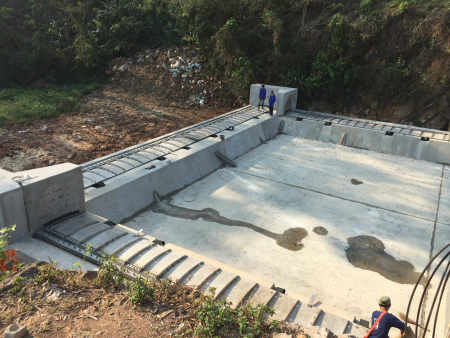
After the dam bag is filled with water to a height of 1.0m, stop water - filling and maintain this state for no less than 1 hour for inspection. After filling water from a dam height of 1.0m to 2.0m, stop water - filling, open the exhaust valve, and close it after all the gas in the dam bag is discharged. Then maintain this state for no less than 1 hour for inspection. After filling water from a dam height of 2.0m to 3.0m, the air - shield dam manufacturer suggests that after the water - filling and - draining procedures of the rubber - dam bag are ready, start water - filling, then stop water - filling and maintain this state for no less than 24 hours for inspection. After the inspection of the water - filled state of the rubber - dam bag is completed and the damaged parts and causes have been identified, the dam can be drained and lowered.
The air - shield dam manufacturer should take rescue measures: Small holes can be temporarily repaired with wooden or rubber plugs. If the through - hole is relatively large or the area of local tearing is not large, a temporary reinforcement treatment can be carried out using a combination of steel plates and bolts for patching.
On - site patching is preferably carried out at a temperature of 18 - 25℃. Both the damaged part of the dam bag and the reinforcing adhesive tape (or rubber sheet) should be cleaned, dried, evenly roughened, and then coated with glue in sequence, striving for evenness. Bond the reinforcing adhesive tape (or rubber sheet) to the dam - bag adhesive tape, and repeatedly roll it horizontally and vertically with a hand - roller to ensure there are no gaps or air bubbles. Then press it evenly with sandbags or heavy objects for more than 24 hours. During the natural vulcanization period, the repaired part of the dam bag should not be folded, and it should be strictly prevented from being soaked by water.
This is all for the content introduced by the air - shield dam manufacturer in this issue. I hope it is helpful to you. If you want to know more, you can follow me!