


News
more+- Professor Chen Erfan, a leader of our company, was invited to attend the inauguration ceremony for the new location of Shenyang Zhilang Technology Co., Ltd. and visited its research achievements and new products.
- The 4th Annual Meeting of the Special Committee and the 3rd New Materials Science & Technology Conference Held in Hangzhou
- Professor Chen, a leader of our company, participated in the Standardization Technical Committee of the Chemical Industry and Engineering Society of China.
- Warm Congratulations on Our Company Being Awarded the Certificate of High-Tech Enterprise!
- Chairman Chen Erfan Participated in Liaoning International Rubber Technology Exchange Festival as a Specially Invited Expert.
contact
more+Contact Phone:13147811246 13147811216
Landline:13147811246 13147811216
Corporate Email:tech@rdpmcn.com
Address:Hongfa International, Shenliao Road, Tiexi District, Shenyang City, Liaoning Province, P.R.China
Sales Phone:13147811246 13147811216
Fire Retardant Technique by Plasma-aided Injection for Materials
Release Date:2026-01-13
Page Views:352
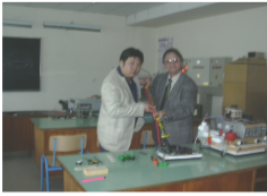
Material Flame Retardant Technology
Combustible materials are widely used in daily life. The dense smoke and toxic gases produced during combustion pose great harm to the environment and human life safety. Therefore, improving the flame retardancy of materials is an urgent issue.
For synthetic materials, flame retardants are mainly added during production and processing. However, applying flame retardants to natural materials such as cotton, linen and wood is difficult.
This technology adopts low-temperature atmospheric plasma-assisted impregnation to achieve flame-retardant modification. The surface of combustible materials is first treated by plasma, then impregnated with an aqueous flame retardant solution, and dried naturally at room temperature to achieve flame retardancy.
This technology (with international patents) has no negative effect on the quality, physical, mechanical and chemical properties of treated materials. It is very convenient to implement and can even be applied on-site directly.
Textiles comply with BDS EN ISO 6941, and wood and wood products comply with BS 476.
This technology has been successfully applied to the internal and external flame retardant treatment of many buildings in Bulgaria, including the National Palace of Culture in Sofia, the Ministry of Foreign Affairs Building, Rila Monastery, National Ballet Theatre, National Television, as well as many cinemas, hotels, restaurants and airline office buildings, with remarkable results. The equipment has been sold to Germany, Turkey and other countries.
Surface Modification Technology
Low-temperature plasma treatment on the surface of non-polar materials (such as difficult-to-bond materials including PE, PP, PTFE and fluororubber) can greatly improve their adhesion performance.The shear strength exceeds 7 MPa.
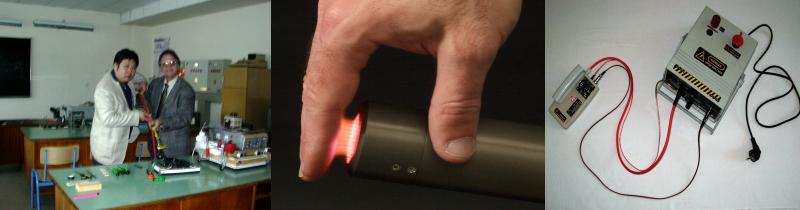
Low-temperature Atmospheric Pressure Plasma Instrument