
News
more+- Professor Chen Erfan, a leader of our company, was invited to attend the inauguration ceremony for the new location of Shenyang Zhilang Technology Co., Ltd. and visited its research achievements and new products.
- The 4th Annual Meeting of the Special Committee and the 3rd New Materials Science & Technology Conference Held in Hangzhou
- Professor Chen, a leader of our company, participated in the Standardization Technical Committee of the Chemical Industry and Engineering Society of China.
- Warm Congratulations on Our Company Being Awarded the Certificate of High-Tech Enterprise!
- Chairman Chen Erfan Participated in Liaoning International Rubber Technology Exchange Festival as a Specially Invited Expert.
contact
more+Adhesives
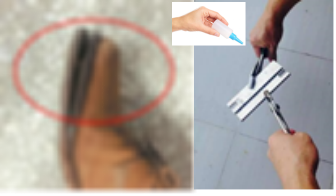
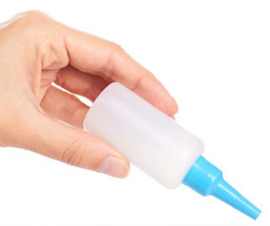
l  Modified Chloroprene Adhesive
Our company has developed a type of high - performance grafted chloroprene adhesive. Its adhesive strength is much greater than that of ordinary chloroprene adhesives. It is a single - component solvent - evaporation drying - type adhesive suitable for self - adhesion or mutual adhesion production of metals, plastics, wood, concrete, ceramics, fabrics, leather, etc. It can also be used for bonding non - polar materials and in products resistant to aging, such as wire and cable sheaths; heat - resistant and flame - resistant products, such as heat - resistant conveyor belts and rubber hoses; oil - resistant and chemical - corrosion - resistant products, such as rubber hoses, rubber rollers, and fittings; as well as other products like rubber - coated fabrics, rubber shoes, and adhesives.
Technical characteristics
Product | Solid Content / % | Viscosity / mPa·s (20℃) | Shear Strength / kN/m | Peel Strength / N/m |
Neoprene Adhesive | 25 | 2.5 | 1.8 | 3.0 |
This Product | 18 | 2.5 | ≥ 4.0 | ≥ 6 |
l Super Glue (Cyanoacrylate)
A 6 - square - centimeter amount of super glue (instant adhesive) can hold an object weighing over one ton. Its main component is cyanoacrylate. It is a single - component, fully transparent solution adhesive that cures at room temperature. It is easy to operate and has excellent water - resistant, oil - resistant, and acid - and - alkali - resistant properties. It is mainly used for mutual adhesion and self - adhesion of soft PVC, synthetic leather, PU artificial leather, butyl rubber, vulcanized rubber, imitation sheepskin, and other materials. At the same time, it has a good bonding effect between soft PVC and metals such as iron plates and steel plates. Its medical - grade glue is mainly used in various surgical operations such as traumatic wounds, plastic surgery, and family planning. It can close wounds, assist in skin grafting, connect lumen organs, and stop bleeding in injuries to organs like the kidneys, liver, spleen, lungs, pancreas, and gastrointestinal tract.
Technical characteristics
Viscosity: 100~300 mPa·s | The surface of the objects to be bonded does not require special treatment. |
Curing speed: 3~5 seconds (at 25℃) | It has good weather resistance, cold resistance and chemical resistance. |
Shear strength: ≥10 MPa (steel-to-steel) | It has high tensile strength. |
Low environmental pollution and low toxicity | Transparent |
l Epoxy adhesive
It is known as the "universal glue" and "strong glue". It has many excellent properties. For example, it has good adhesion, high adhesive strength, low shrinkage rate, stable dimensions, excellent electrical properties, resistance to chemical media, is easy to prepare, has a simple process, a wide service temperature range, strong adaptability, low toxicity, little harm, and does not pollute the environment. It has a good adhesive ability to a variety of materials and also has multiple functions such as sealing, insulation, leak - proofing, fixing, anti - corrosion, and decoration. It has a strong adhesive force to various polar materials such as metals, glass, cement, wood, and plastics. Therefore, it has been quite widely and very successfully applied in fields such as aviation, aerospace, military industry, automobiles, construction, machinery, ships, electronics, electrical appliances, information, chemical industry, petroleum, railways, light industry, agricultural machinery, arts and crafts, cultural and sports supplies, cultural relic restoration, and daily life.
Technical characteristics
Test Item | Specification (MPa) | Notes: |
Aluminum Alloy Shear Strength | 22.0~25.0 | · Curing Conditions: 25°C / 3 hours · Test Conditions: Room temperature · Service Temperature Range: -60°C ~ +160°C
|
Stainless Steel Shear Strength | 27.0~30.0 | |
Copper Shear Strength | 14.0~17.0 | |
Carbon Steel Tensile Strength | 53.0~60.0 | |
Aluminum Peel Strength | ≥ 0.25 |
l Polyurethane adhesive
Polyurethane (PU) adhesives contain polar groups such as urethane groups, isocyanate groups, and urea groups, which can form covalent bonds and hydrogen bonds with materials containing active hydrogens. Moreover, by adjusting the formula of polyurethane, it can meet the bonding requirements of different materials like metals, rubbers, plastics, wood, leather, fabrics, paper, glass, and ceramics. Polyurethane adhesives can be cured by heating or at room temperature. The bonding process is simple, with excellent operability. During curing, there are no side reactions, making it less likely to cause defects in the bonding layer. It can be classified into general - purpose type, food - packaging - use type, shoe - use type, paper - plastic - composite - use type, construction - use type, structural - use type, ultra - low - temperature - use type, foaming type, anaerobic type, conductive type, hot - melt type, pressure - sensitive type, blocked type, water - based type, and sealing type.
Technical characteristics
Category | Appearance | Viscosity (20℃) | Density | Solvent Insolubles | Bonding Strength |
Specification | Light yellow transparent | 2~4 mPa·s | 0.9~1.32 g/cm³ | 53.0~60.0 | ≥ 4 MPa |
· Curing Conditions: 100°C / 2 hours · Storage Conditions: Store in a dry, light-proof environment at 5-25°C; shelf life up to 18 months · Unit correction: The original density unit "g/cm" is adjusted to the industry-standard "g/cm³" for technical accuracy | |||||
l Organic silicone adhesive
Organic silicone adhesives can be classified into two major categories according to molecular structure: silicone resin adhesives and silicone rubber adhesives. According to the curing method, they can be divided into three types: condensation type, addition type, and polymerization type. According to the curing temperature, they can be further divided into high - temperature curing, low - temperature curing, and room - temperature curing types. They have excellent properties such as resistance to high and low temperatures, water resistance, corrosion resistance, and resistance to atmospheric aging. They can be prepared by mixing and kneading silicone resin solutions or silicone rubbers, fillers, cross - linkers, catalysts, and other additives. They are suitable for bonding and sealing metal, ceramic, glass, and plastic parts. They are widely used in departments such as aerospace, aviation, electronics and electrical appliances, construction, and medical and health care.
Technical characteristics
Test Item | Specification | Technical Notes |
Tensile Strength | ≥ 1.10 MPa | Tack-free Time: 20~30 minutes Room Temperature Curing Time: 20 hours
|
Elongation at Break | ≥ 150% | |
Shear Strength of Aluminum Bonded Parts | ≥ 1.10 MPa | |
Surface Resistance | ≥ 5×10¹² Ω | |
Breakdown Voltage | ≥ 165 V/m | |
Dielectric Constant | 3.00±0.4 | |
Service Temperature Range | -60~150℃ | |
Tack-free Time | 20~30 minutes | |
Room Temperature Curing Time | 20 hours |
l Inorganic adhesive
Also known as ceramic adhesives, inorganic adhesives are glues composed of inorganic salts/acids/bases and metal oxides and hydroxides. They mainly include phosphates, silicates, borates, and sulfates, etc. Usually, it is in paste form, water - soluble, pollution - free, non - flammable, has high bonding strength and low cost. It has good resistance to high and low temperatures, oil, radiation, and aging. However, it is not resistant to acids and alkalis, is brittle, and is not suitable for lap joints and butt joints. It is more suitable for sleeve joints.
Technical characteristics
Test Item | Specification | Note: |
Flexural Strength | ≥ 9 MPa | Technical indexes measured at 1600℃.
|
Compressive Strength | ≥ 20 MPa | |
Shear Strength | ≥ 1.6 MPa | |
Temperature Resistance | 1600℃ | |
Linear Shrinkage Rate | ≤ 10% | |
Bulk Density | ≥ 2.2 g/cm³ |
 |  |  |
| Modified Chloroprene Adhesive | Super Glue (Cyanoacrylate) | Epoxy adhesive |
 |  |  |
| Polyurethane adhesive | Organic silicone adhesive | Inorganic adhesive |